Product Video
Side Driven Belt Structure Before Drive Matching
Visual reference for OEM systems where belt path, pitch, and sprocket engagement must be matched before production release.
Side sprocket engagement on both belt edges delivers maximum pull force and stable lateral tracking. The standard drive configuration for spiral freezer systems, straight conveyor lines, and incline applications across food processing and industrial environments.
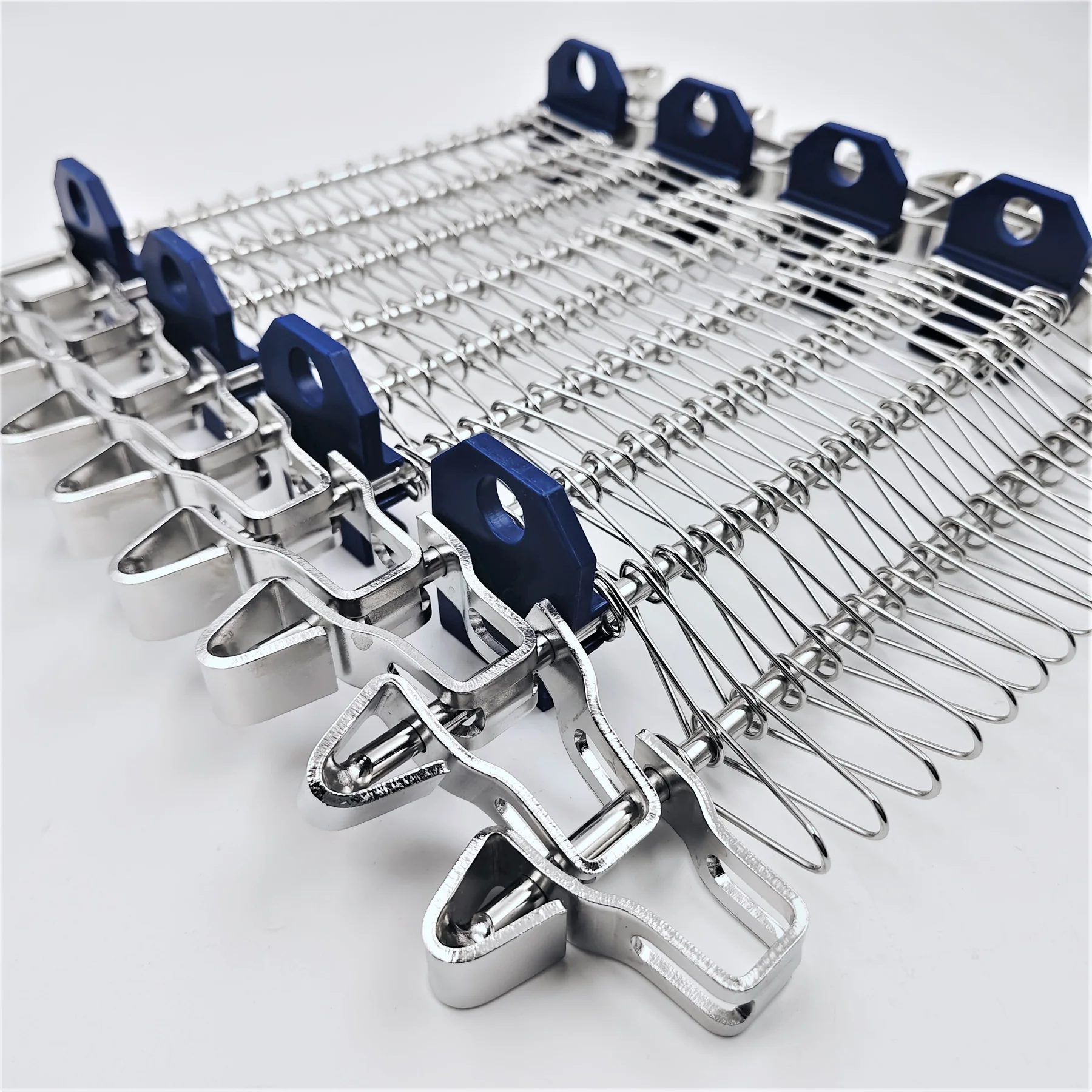
All dimensions custom per OEM drawing. Confirmed with engineering team before production begins. No standard fixed sizes.
| Parameter | Specification | Notes |
|---|---|---|
| Drive System | Side sprocket, both edges | Consistent pull force across full belt width |
| Wire Diameter | 1.2mm - 6.0mm · Custom | In-house drawn, all diameters verified by alloy test |
| Spiral Pitch | Custom per OEM drawing | Matched to sprocket tooth geometry before production |
| Rod Pitch | Custom per OEM drawing | Structural calculation per load and conveyor speed |
| Belt Width | Custom - 100mm to 3,000mm+ | Confirmed to OEM drawing before production |
| Edge Construction | Reinforced side bars both edges | Sprocket engagement geometry machined to drawing |
| Material Grades | SUS304 / SUS316L / 310SS / Carbon Steel | Grade selected to temperature and environment |
| Temperature Range | -40°C to 1,100°C (grade dependent) | SUS316L for deep freeze; 310SS for furnace |
| Surface Finish | Natural / Electro-polished / Passivated | Hygiene-sensitive grade on request |
| Drum Test | 100% - every belt before shipment | Engagement verified at target drum diameter |
| Production Control | Edge geometry and weld-point inspection | Consistent sprocket engagement and drawing compliance |
| Lead Time | 15-25 working days from drawing confirmation | Standard batch production |
| MOQ | 1 piece for sample / Standard MOQ for production | Sample review available for new OEM projects |
All parameters are custom per OEM drawing. Send your drawing or existing belt dimensions - we confirm the specification and quotation path after engineering review.
Real side-driven belt product photos showing reinforced edge bars, sprocket engagement geometry, and production-ready stainless steel construction.
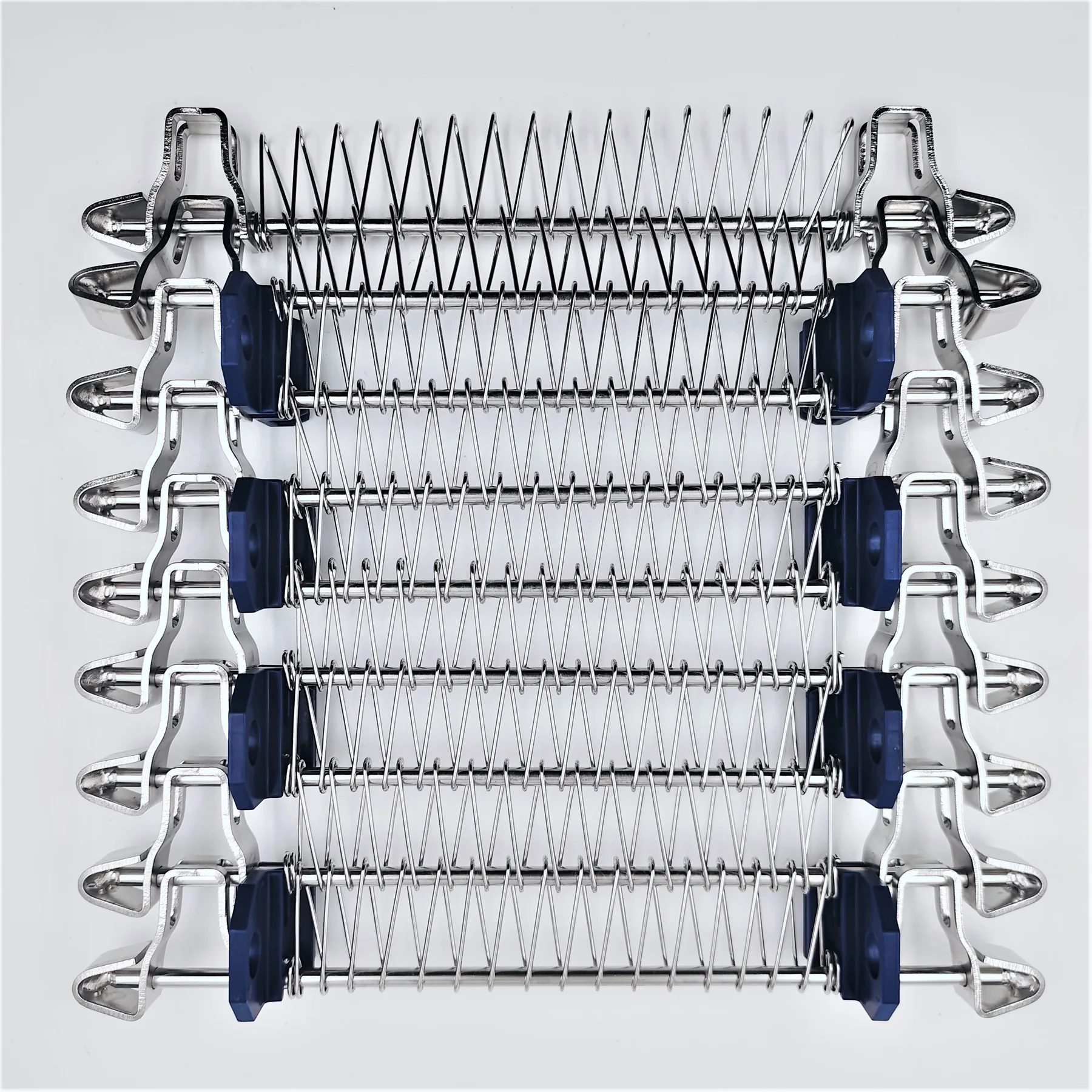
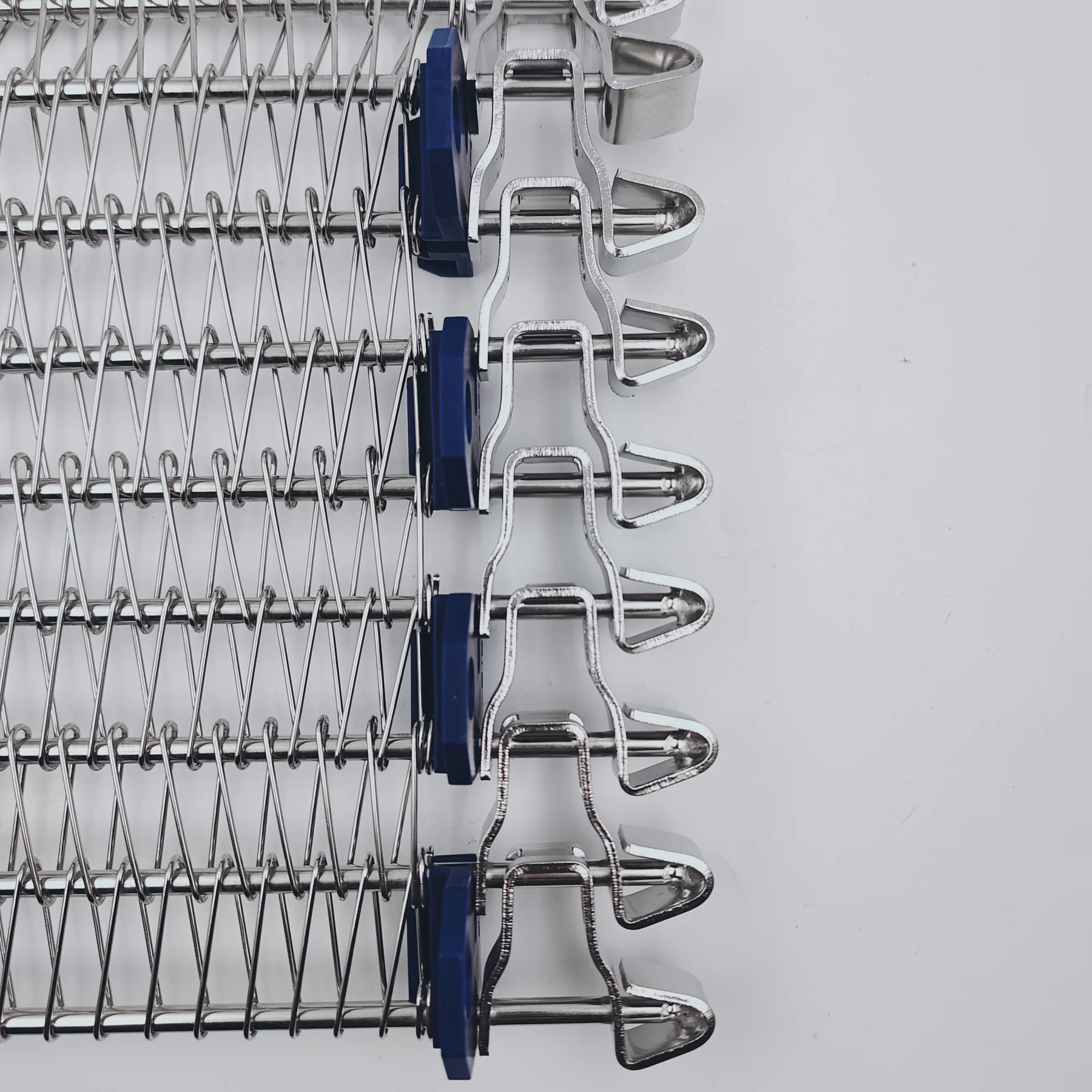
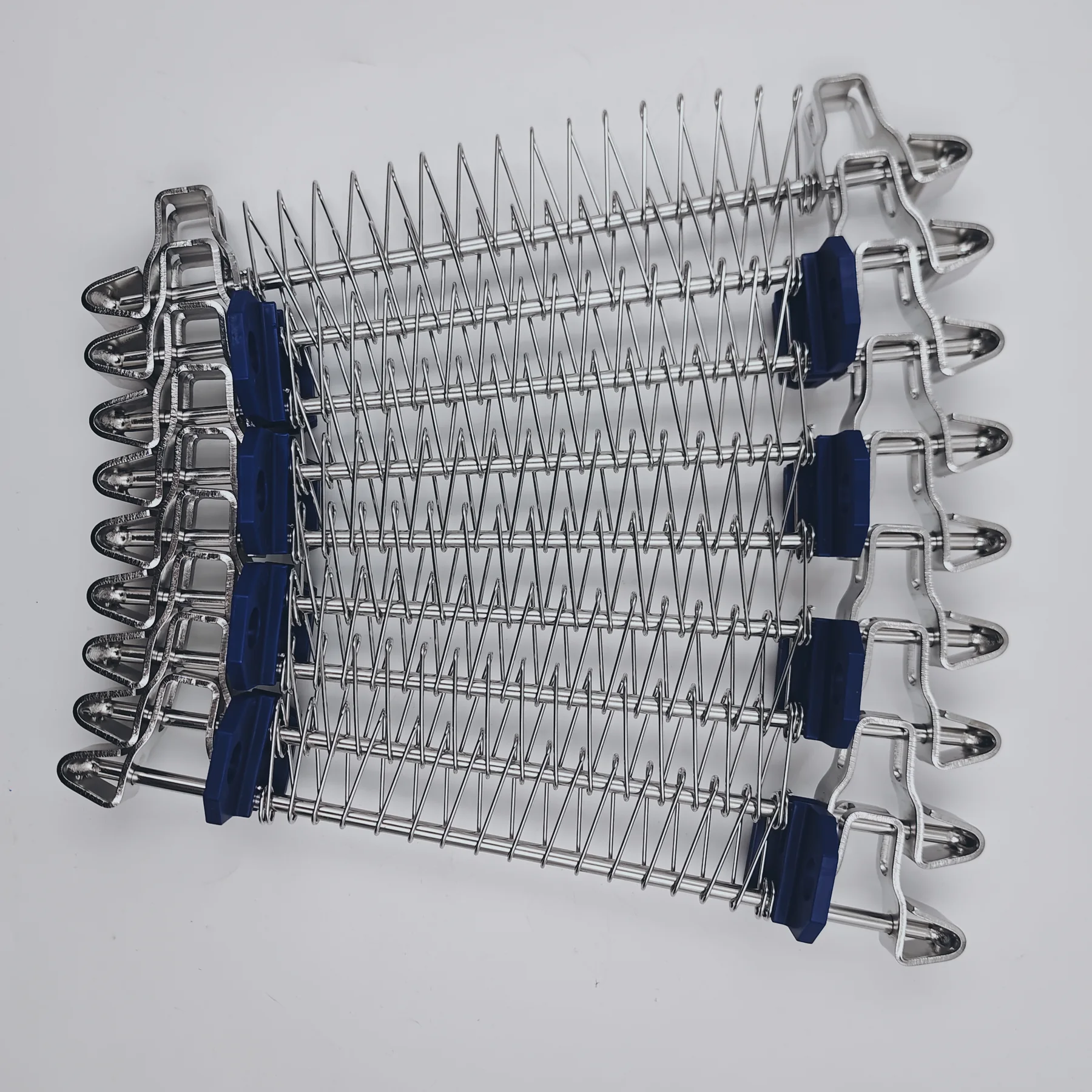


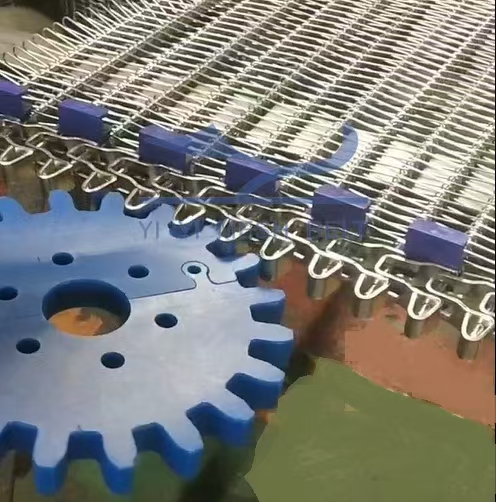
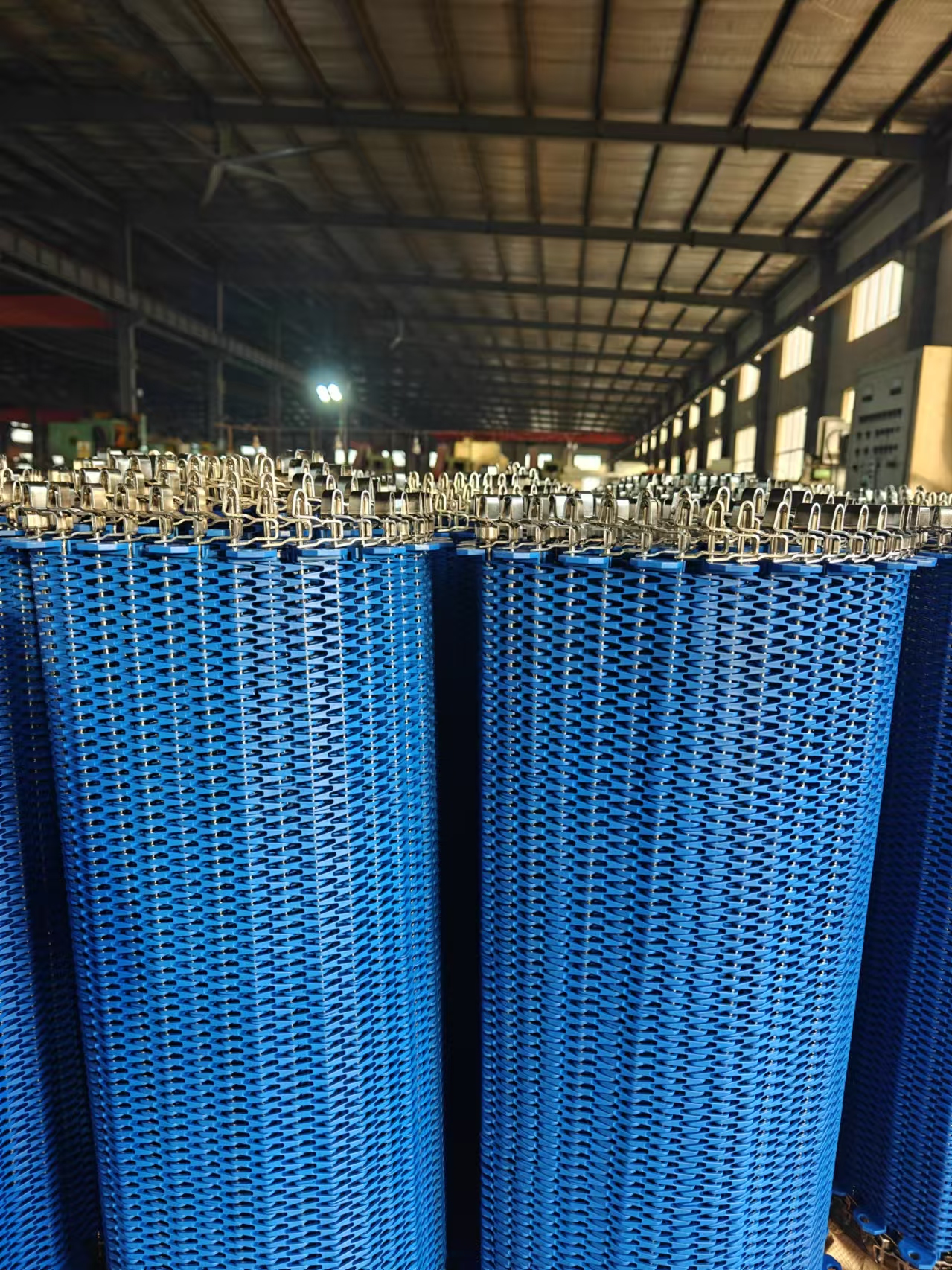
Use this short product video to review edge drive structure, mesh surface, and sprocket engagement area before confirming a spiral path, curved section, or replacement project.
Visual reference for OEM systems where belt path, pitch, and sprocket engagement must be matched before production release.
Every claim is backed by a verifiable manufacturing process or documented test result.
Every belt runs on its target drum diameter before shipment. This single test eliminates the most common cause of conveyor system failure on first installation.
Side-driven belts depend on precise edge geometry, stable sprocket engagement, and controlled assembly. YIYI verifies the belt edge structure before shipment instead of relying on visual appearance alone.

IQC →In-Process →Drum Test →Final QA. No belt leaves the factory without passing all four stages.
Real operating environments. Each application listed has active YIYI Mesh Belt belts running in customer facilities.
Material grade selected to operating temperature, chemical exposure, and application material requirements. Not to cost alone.
No system modification required. Send photos or drawings of your existing belt - our engineering team reviews the specification and can prepare a test sample before production commitment.
These represent the most common OEM engagement patterns for side driven belt supply.
Use this guide to confirm side driven belt is the correct specification before requesting a quote.
These guidelines apply to most side driven belt installations. Always follow your system manufacturer's commissioning procedure.
Before threading the belt, confirm the sprocket tooth pitch matches the belt edge bar pitch at room temperature. The drum test certificate supplied with the belt confirms this - check the drum diameter and tooth pitch recorded on the certificate match your system.
Side driven belts installed in freezer systems (-40°C) will contract slightly at operating temperature. Allow for this in initial tensioning - do not over-tension at room temperature. For high-temperature applications (>200°C), conversely allow for thermal expansion. Our engineering team provides calculated expansion figures for your specific belt specification on request.
For new belt installations, run the belt at reduced speed (50% of operating speed) for the first 4 - hours under no-load or partial-load conditions. This allows the belt joints and sprocket engagement to settle without excessive stress on the edge bar welds. Monitor tracking closely during the run-in period and adjust belt tension symmetrically.
Inspect edge bars and sprocket engagement teeth at 3-month intervals or after every major CIP washdown cycle. Look for: wear on the sprocket tooth engagement face of edge bars, any lateral drift in belt tracking, and weld integrity at the edge bar-to-spiral joint. Early detection of edge bar wear prevents sprocket damage and allows planned belt replacement rather than emergency stoppage.
SUS316L side driven belts are CIP washdown compatible. After washdown with caustic or acid CIP chemicals, rinse thoroughly with clean water before returning the belt to service. Do not allow concentrated caustic solution to dry on the belt surface - this can cause surface discolouration that is difficult to remove and may affect material review audit compliance.
Need installation support? Our engineering team provides technical commissioning guidance for OEM partners. Contact us via WhatsApp (+86 134 5177 3742) or email for application-specific installation advice.
Understanding the engineering principles behind side driven belt design helps specify the right belt and predict service life accurately.
The edge bar is the highest-wear component in a side driven belt system. The tooth engagement face of the edge bar is subject to both tensile load and shear force from the sprocket tooth. YIYI Mesh Belt edge bars are formed and welded to drawing - not punched from flat bar - giving superior weld joint strength and consistent engagement geometry across the full belt length.
Edge bar height, pitch, and material grade are all calculated from your sprocket drawing before production. We do not produce a standard catalogue edge bar - every dimension is to your specification.
Spiral pitch determines three interdependent parameters: open area percentage, belt flexibility (minimum drum diameter), and structural strength per unit width. Tighter pitch gives higher load capacity and smaller minimum drum diameter at the cost of lower open area. Wider pitch gives more open area and higher flexibility at the cost of lower structural capacity per unit width.
For spiral freezer applications, pitch is typically set by the system designer. For new system development, our engineering team provides calculated recommendations based on load, speed, and drum diameter.
Wire diameter is the primary determinant of belt tensile strength and fatigue resistance. Under-specified wire diameter is the most common cause of premature belt failure in side driven systems. YIYI Mesh Belt calculates minimum wire diameter from your conveyor geometry, belt speed, and maximum product load - not from catalogue defaults.
All wire is drawn in-house and tensile-tested to verified yield and ultimate tensile strength before production. UTS reference values can be confirmed by material grade and wire diameter during engineering review.
Side-driven belt fatigue usually starts where edge engagement, pitch, and tension are not matched correctly. YIYI checks edge bar profile, pitch consistency, and sprocket contact so the drive load is distributed correctly during operation.
Our 5-robot welding system runs fully automated. Weld parameters are monitored and logged per batch. No manual welding is used for any structural joint in our side driven belts.
Active export to 30+ countries. Sea freight, air freight, and railway (China-Europe). Full documentation support for customs clearance in all major markets.
Every claim on this page is backed by a physical document, a production record, or an on-site verifiable fact.
Every belt is packaged to the same export standard regardless of order size. Belt integrity at delivery is our commitment.
Belt coiled to minimum bend radius specification, wrapped in moisture-sealed polyethylene film with silica gel desiccant inside. Protects against corrosion in sea container humidity conditions during 30+ day sea freight transit.
Corrugated cardboard inner box with edge protection. Belt coil supported on foam cradles preventing deformation during transit. Inner box sealed against dust ingress during port handling.
ISPM15 heat-treated timber pallet for international phytosanitary compliance. Pallet rated for standard 20ft and 40ft container loading. Strap-secured for forklift handling at destination port.
Each shipment includes: commercial invoice, packing list, certificate of origin (CCPIT or Form A on request), material test report (on request), ISO 9001 certification copy, and drum test record. Additional customs documentation on request for EU, USA, and Australian market requirements.
YIYI Mesh Belt tracks confirmed shipments from factory to port. Vessel booking confirmation, bill of lading, and arrival updates are shared at each logistics milestone.
Every YIYI Mesh Belt belt is traceable from the wire rod batch used to produce the wire, through production records, to the specific belt shipped to your facility. This is a fundamental requirement for OEM customers with their own quality systems.
SUS304 and SUS316L wire rod sourced from certified Chinese and Taiwanese mills. Mill certificates showing alloy composition (Cr, Ni, Mo %, C content) filed per batch. Every batch passes YIYI Mesh Belt incoming alloy gun spectrometer test before acceptance.
Wire drawn from rod to finished diameter on YIYI Mesh Belt equipment. Finished diameter measured by digital calliper at regular intervals during drawing. Tensile strength and hardness tested on drawn wire sample per batch. Results recorded in production batch file.
Production batch number assigned at start of forming. Edge geometry, pitch, inspection date, machine ID, and operator record are linked to the wire batch and retained for traceability.
Drum test result recorded on signed QA form. Records: drum diameter tested, engagement pitch confirmed, test date, inspector ID, pass/fail result. Drum test certificate available as part of shipment documentation package on request.
Completed belt ships with batch number linking to full production and test record. Material test report issued on request. Full traceability from wire rod mill to customer facility is available for customer quality audit support.
Our approach to after-sales is built on the same principle as our production: consistency and reliability. Not a call centre - a real engineer who knows your specification.
Active orders and delivered belts receive engineering support on technical queries. Contact via WhatsApp for the fastest routing to the right team.
Your belt drawing and specification are retained in our engineering library. Reorders are placed by reference code - no re-measurement needed. Reorder lead time is typically 20% faster than first production for retained specifications.
For OEM partners, we follow up at 6 and 12 months after installation to check belt performance. If any tracking, wear, or engagement issue is reported, we review the production record and provide a root cause assessment - no charge for OEM partners.
"My work time is always online - see the message, reply promptly. This has been my habit for over 15 years. Doing business is not only about transactions, but about building genuine friendships." - YIYI Mesh Belt
Comparing key manufacturing differentiators. Based on verifiable production facts - not marketing claims.
| Capability | YIYI Mesh Belt | Typical China Manufacturer | European Supplier | Trading Company |
|---|---|---|---|---|
| In-house wire drawing | ✓ YIYI Mesh Belt - own equipment | ✗ Most buy externally | ✗ Most buy externally | ✗ Trading companies |
| Edge geometry control | ✓ Drawing-based inspection | Variable | Partial | ✗ Not documented |
| Drum diameter test | ✓ 100% every belt | Selective | ✗ Not standard | ✗ Not offered |
| Sample review policy | ✓ Available for new OEM | Paid samples | Paid samples | ✗ No sample |
| OEM drawing support | ✓ Engineering team | Depends on size | Limited | ✗ Catalogue only |
| Engineering response | ✓ Direct technical review | 24-48 hours | 24-72 hours | Variable |
| Material grade range | ✓ CS/304/316L/310S/314 | 304/316L only | Limited range | Limited |
* Comparison based on publicly available information and direct customer feedback. Contact us to verify any specific claim.
The more information you provide, the faster we can confirm specification and quote. Minimum required: industry, temperature, belt width, and drive system.
With these 5 items: budgetary quote + material recommendation after engineering review.
With A-F: confirmed production quote + drawing confirmation after specification review.
Email to info@yiyimeshbelt.com or WhatsApp +86 134 5177 3742. Drawings, photos, or reference documents are all accepted for engineering review.
Based on replacement inquiries from spiral freezer and industrial conveyor operators across 30+ countries. These are the verified failure patterns - and what we do differently.
Engineering-level answers from our technical team. 15+ years of side driven belt manufacturing experience.
Yes. Provide your existing belt sample, OEM drawing, or the brand's specification reference, and we will produce a dimensionally equivalent replacement. We confirm spiral pitch, rod pitch, edge bar height, and sprocket engagement profile to match your system exactly. Our drum diameter test validates the replacement before mass production - ensuring the belt runs on your existing equipment without modification. Many OEM customers use YIYI Mesh Belt as a practical replacement supply partner when they need stable quality, shorter lead times, and engineering confirmation before production.
Side driven belts have reinforced edge bars that engage with drive sprockets on both sides of the belt - they work on straight conveyors, incline systems, and spiral freezers with a fixed-cage drum. Self-stacking belts use a compact loop geometry that allows the belt to stack on itself on the drum without sprocket engagement - the standard for space-constrained compact spiral freezer systems. For spiral freezer replacement where the system uses a side-drive cage, side driven is the correct specification. For self-stacking drum systems, see our Self-Stacking Belt page. If you're unsure, send us your system specification and we'll advise.
The minimum we need: belt width (inside dimension), drum diameter, spiral pitch, rod pitch, wire diameter, and edge bar height. For sprocket-driven systems, the sprocket tooth profile drawing is essential. If you are replacing an existing belt, photos of the current belt (edge detail, sprocket engagement zone, and any pitch markings) plus the system manufacturer's name usually provide enough to identify the full specification. You do not need to have every dimension - send what you have and we will identify the gaps in the first engineering response.
Share your sprocket drawing or the existing sprocket dimensions - tooth pitch, tooth height, engagement depth, and root radius. We machine the belt edge bars to match your sprocket geometry. If you are designing a new system, we can advise on optimal tooth profile based on belt specification, conveyor speed, and load. For replacement projects, we strongly recommend sample test-fitting before committing to full production - this confirms engagement before investment.
Under typical IQF spiral freezer conditions, YIYI Mesh Belt side driven belts are designed for long-term continuous service when the belt specification, drum diameter, tension, and sanitation procedure are correctly matched. Edge geometry control helps reduce early engagement and tracking problems in high-cycle operation. In-house wire drawing supports consistent tensile properties that determine wear rate under sustained drive load. Actual service life depends on operating temperature, product loading, drive tension, and sanitization frequency.
Yes - side sprocket engagement provides positive drive traction that is well-suited to incline conveying. Maximum practical incline depends on product type, belt surface treatment, and drive tension. For food processing inclines, we recommend confirming the application with our engineering team for angles above 15 degrees. For very steep inclines, we may recommend a modified edge bar geometry to maximise traction under load.
Minimum drum diameter is a function of wire diameter, rod pitch, spiral pitch, and belt width - there is no single universal value. We calculate this from your OEM drawing and verify during the drum test before mass production begins. Attempting to run a belt at below-minimum drum diameter causes accelerated fatigue at the spiral-to-rod welds. If you are unsure of your system's drum diameter, share the system model and we will advise based on known equipment specifications.
Yes. For new OEM relationships, we produce a sample to your confirmed specification before full production when test-fitting is required. Typical sample lead time is 7-10 working days. The sample should be test-fitted on your system before confirming the production order. We retain a reference sample from your specification for quality benchmark comparison on future orders. This process protects both sides: you verify the belt fits before committing, and we confirm our production record is correct.
For IQF spiral freezer applications at -40°C: SUS316L (low-carbon grade maintains ductility at cryogenic temperatures). For ambient food processing and baking ovens to 200°C: SUS304 (standard food-processing). For heat treatment furnaces above 600°C: 310SS. For extreme temperature sintering above 1,000°C: 314 grade. If your application falls in a borderline range, share operating temperature and cycle frequency - we will specify the correct grade based on thermal fatigue requirements, not just peak temperature.
Standard production lead time is 15-25 working days from drawing confirmation. For rush OEM projects, contact us to discuss priority scheduling. Standard documentation per shipment: packing list, commercial invoice, certificate of origin, material test report (on request), ISO 9001 certification copy, and drum test validation record. Additional documentation available on request: alloy composition certificate, third-party inspection report, MSDS, and customs HS code advisory for your country.
Spiral pitch, wire diameter, edge bar profile, drum diameter - send your OEM drawing or existing belt photos. Our engineering team confirms the specification and quotation path after review.