+86 134 5177 3742 info@yiyimeshbelt.com Mon - Fri 08:00 - 17:00 CST
Manufacturing Since 1998 ISO 9001 Certified Third-Party Factory Audit Welcome
Home Products Chain Driven Conveyor Belt
CHAIN DRIVEN CONVEYOR BELT   ·   POSITIVE DRIVE   ·   OEM & REPLACEMENT

Chain Driven Conveyor Belt
Positive Drive. Stable Running.
System-Matched Production.

Wire mesh belt with welded side chains, driven positively by sprockets. Manufactured with diagonal measurement during production, square-riveted large rollers, and matched sprocket supply. Used in washing, drying, cooling, and heavy-load industrial conveyor lines where friction drive is insufficient or unreliable.

Chain Positive Drive Diagonal Measurement Square-Riveted Rollers Sprocket Matched SUS304 / 316L ISO 9001
Positive
Chain Drive
Diagonal
Measurement
Square
Riveted Rollers
Sprocket
Matched Supply
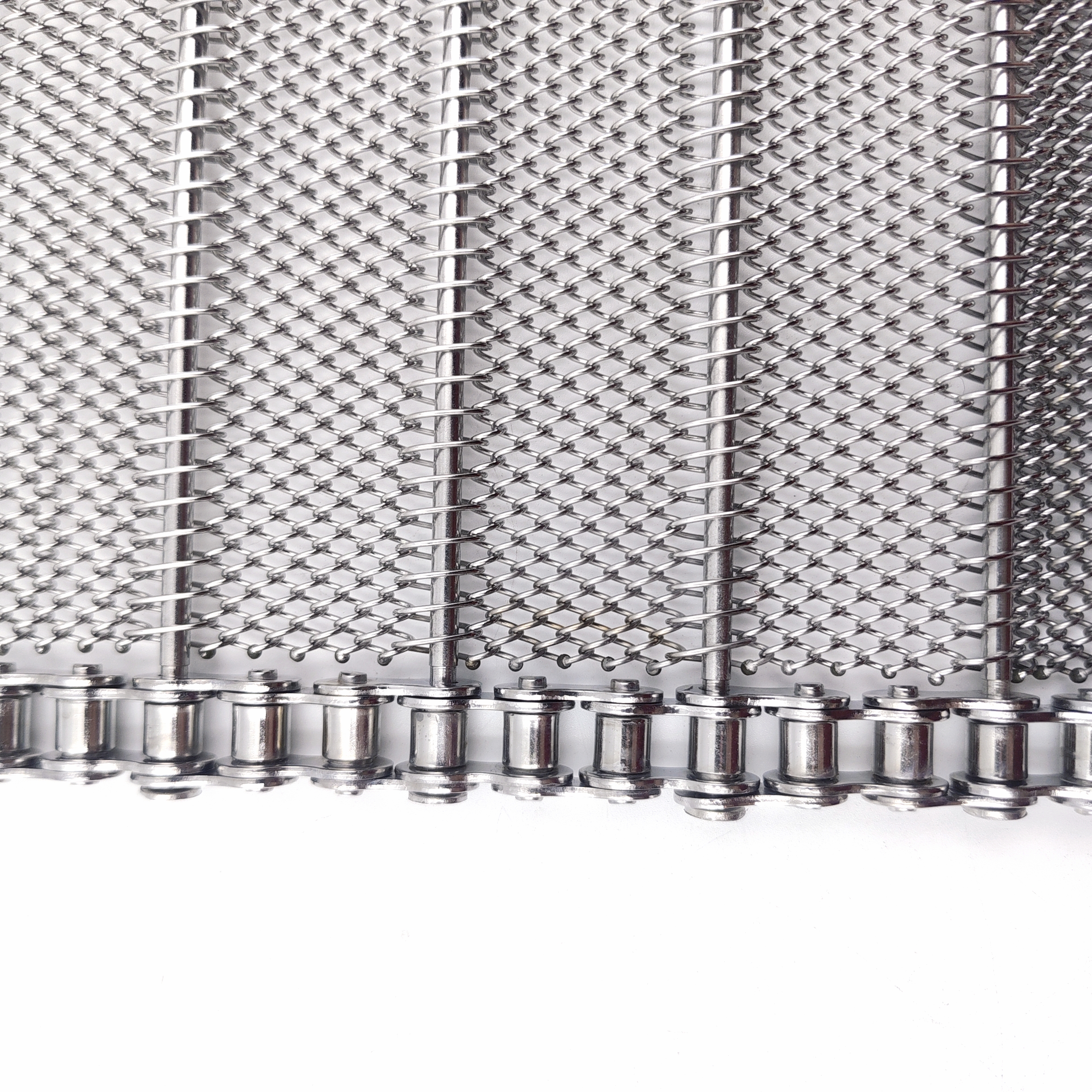
Chain driven conveyor belt overview with side chain and wire mesh surface
Full belt overview · side chain · mesh surface · roller detail
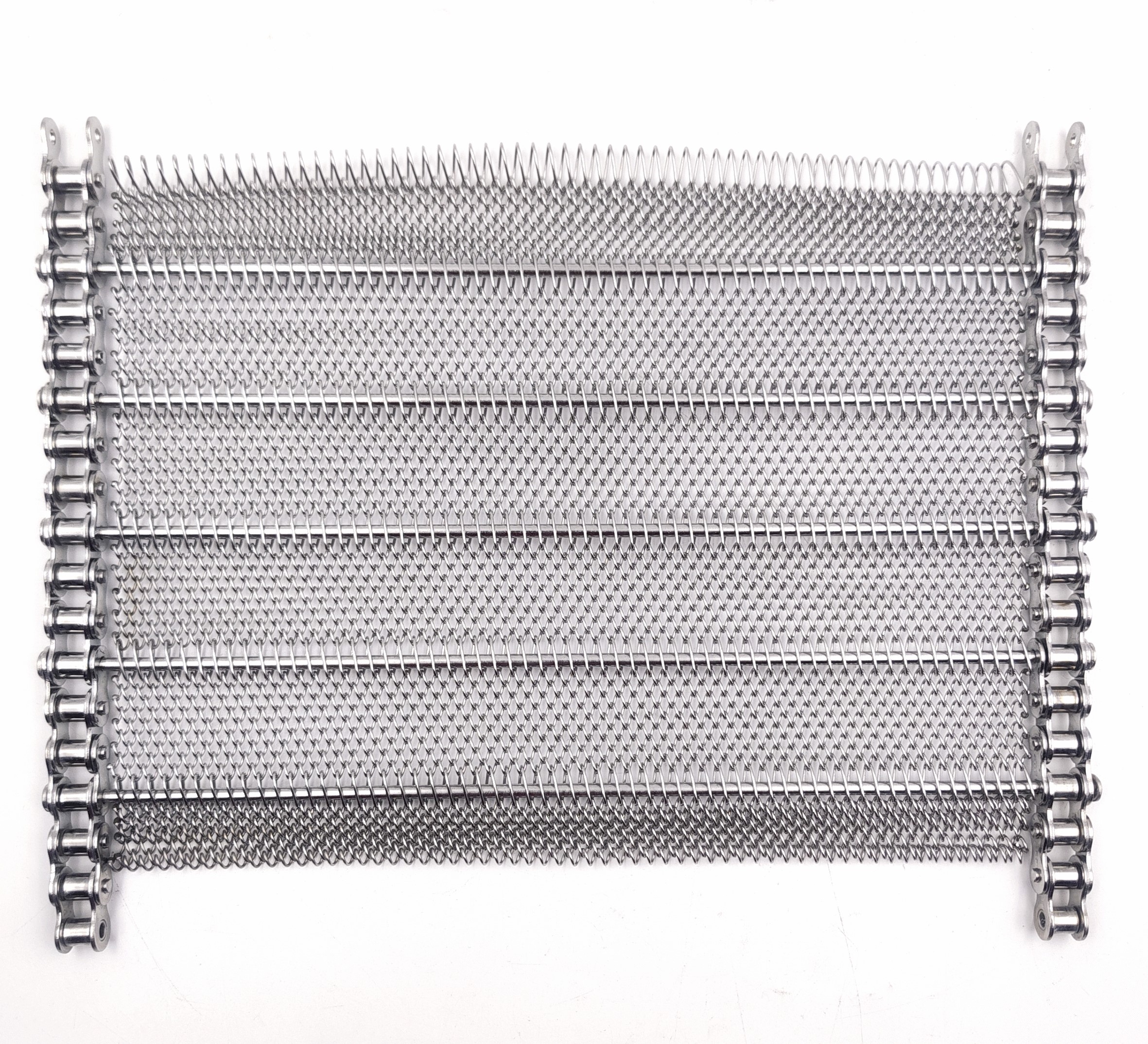
Chain driven belt side chain close-up
Chain edge close-up
Chain driven belt roller and rod assembly detail
Roller and rod assembly
Diagonal Measurement During Production
Square Riveting for Large Rollers
Matched Sprocket Supply
Sample Review Before Mass Production
ISO 9001 · 24h Engineering Response
WHY CHAIN DRIVEN BELT

When Positive Drive Stability Is the Requirement

Friction drive works well for standard loads and dry conditions. When the conveyor operates in wet environments, carries heavy loads over long distances, or needs consistent belt tracking across wide widths, chain drive becomes the appropriate engineering choice - not a premium upgrade, but a functional requirement.

📦
Wet and Slippery Environments
Washing lines, draining tables, and wet processing conveyors reduce surface friction between belt and drive. Chain drive transmits force through mechanical engagement - independent of surface condition. Belt speed and tracking remain consistent regardless of water, oil, or cleaning agent contact.
Heavy-Load Conveyor Sections
In heavy-load applications, tension-only friction drive concentrates stress on the belt mesh. Chain driven systems transfer drive force through the side chain, not through the mesh wire - allowing the mesh to carry product weight without carrying drive tension simultaneously. This separation extends belt service life.
🧪
Wide Belt Tracking Stability
Friction drive on wide belts creates uneven tension distribution across the belt width. Side chains maintain consistent lateral alignment regardless of belt width. This is particularly relevant for tunnel ovens, large washing systems, and multi-lane processing lines where wide belt tracking is critical.
🔄
Drying and Cooling Lines
Temperature cycling and airflow management in drying and cooling conveyors can affect belt tension behaviour. Chain drive provides consistent advance speed independent of thermal expansion variation in the mesh structure - important for controlled process timing in drying and cooling applications.
🏗️
Long Conveyor Runs
Over long conveyor distances, friction drive accumulates tension variation that can cause belt drift or uneven wear. Positive chain drive distributes force through engaged sprockets at defined pitch intervals - maintaining consistent belt geometry and reducing the risk of lateral drift on long-run conveyor systems.
🕒
Process Timing Requirements
Where belt speed accuracy affects product handling - pasteurisation timing, indexed loading, or controlled dwell time in heat treatment - chain pitch provides a fixed advance-per-revolution relationship. This supports documented process control accuracy that friction drive cannot reliably deliver under variable load conditions.
STRUCTURE OVERVIEW

Component Relationships in a Chain Driven Belt

A chain driven conveyor belt is not a standard mesh belt with chain added at the edges. The relationship between mesh pitch, chain pitch, rod diameter, roller fixation, and sprocket tooth profile must be reviewed together - and confirmed against your equipment drawing - before production begins.

01
Side Chain
Welded chain running along both belt edges. Chain pitch matched to drive sprocket specification. Transmits all drive force - the mesh carries product load only.
02
Cross Rods
Structural rods passing through the belt width, connecting both side chains. Rod diameter and spacing confirmed to load and drive requirements. Rod consistency affects diagonal measurement results.
03
Mesh Surface
Wire mesh between chains - carries product, supports airflow or drainage. Mesh type (balanced weave, compound weave, flat wire) selected per application temperature, product contact, and drainage requirement.
04
Rollers
Rollers positioned at chain contact points for smooth tracking on conveyor return path. Large rollers fixed by square riveting - a structural fixation method, not a cosmetic detail. Roller diameter and position confirmed per conveyor design.
05
Drive Sprockets
Chain pitch and sprocket tooth profile must be matched. YIYI Mesh Belt manufactures matched sprockets - ordering belt and sprockets together eliminates the installation mismatch risk of sourcing separately.
06
Assembly Geometry
Belt assembly geometry - including diagonal measurement - determines running balance. Diagonal deviation produces uneven tension distribution that causes lateral drift under load. Geometry is checked during production, not only at final inspection.
Chain driven belt full structure overview
Full structure · chain · mesh · rod · roller assembly
Chain driven belt chain-to-rod connection detail
Chain-to-rod connection
Chain driven belt mesh surface and roller detail
Mesh surface detail
CONFIGURATION REVIEW

All chain driven belt configurations are reviewed against your equipment drawing before production begins. Chain pitch, mesh type, roller position, and sprocket geometry are confirmed in writing before any material is prepared.

MANUFACTURING TRUST POINT 01

Diagonal Measurement During Production

Running balance in a chain driven belt depends on more than chain strength. A belt with correct chain pitch and correct mesh wire can still run unevenly if the assembly geometry is not square. Diagonal measurement is the production-stage check that verifies this - before the belt is completed, not after it has been shipped.

What it isDiagonal measurement checks the corner-to-corner dimension of the belt frame during assembly. If the two diagonal measurements are equal, the belt geometry is square and structurally consistent.
Why diagonal deviation mattersWhen diagonal dimensions differ, one side of the belt is longer than the other. Under load, this asymmetry creates uneven tension distribution across the belt width - causing the belt to drift laterally, wear unevenly, or track inconsistently in operation.
When it is performedDiagonal measurement is done during belt assembly - as a production-stage control point. This allows correction before the belt structure is finalised, rather than discovering geometry deviation only at final inspection when correction is no longer practical.
What it affectsBelts produced with diagonal measurement control show more consistent running behaviour - particularly on longer conveyor runs, wider belt widths, and systems with tight lateral clearance between belt edge and conveyor frame.
View Manufacturing Process →
Chain driven belt geometry and diagonal control reference
Geometry reference · chain pitch and belt squareness review
Chain pitch reference detail
Chain pitch reference
Chain driven belt production geometry detail
Geometry verification detail
WHY THIS IS A PRODUCTION CONTROL - NOT JUST AN INSPECTION

Final inspection can identify a problem. Production-stage measurement can prevent it. Diagonal measurement during assembly is a documented process control point - it supports correction while the belt can still be adjusted, not a record of deviation after the fact.

Large roller detail on chain driven conveyor belt
Large roller detail · stable support for heavier conveying loads
Chain driven belt large roller overview
Large roller overview
Chain driven belt edge and roller close-up
Edge and roller close-up
Product video reference
MANUFACTURING TRUST POINT 02

Large Rollers Fixed by Square Riveting

Roller fixation method determines the long-term structural reliability of the belt at the chain contact zone. Large rollers on chain driven belts experience repeated engagement stress as the belt passes over the drive and return sprockets. How the roller is fixed to the rod affects whether this fixation remains stable over the operating life of the belt.

The Challenge
Roller Displacement Under Repeated Load
Large rollers on chain driven belts are subject to repeated lateral and rotational force at every sprocket engagement point. Insufficient fixation allows rollers to shift position over time - affecting chain engagement geometry, belt tracking, and drive efficiency.
✓Square Riveting Response
Mechanically Locked Fixation
Square riveting deforms the rod end into a square profile at the roller connection point, creating a mechanical lock against rotation and lateral movement. This fixation method supports structural stability under repeated engagement stress - a production-stage manufacturing decision that affects long-term belt behaviour.
Not a cosmetic detailSquare riveting is a structural manufacturing step. It affects fixation reliability at the roller-to-rod connection - which is a high-stress zone on chain driven belts.
Applied to large rollersSmall rollers may use simpler fixation methods. Large rollers - which carry higher engagement loads - are fixed by square riveting to support more stable long-term operation.
Relevant for replacement matchingWhen replacing an existing belt, roller fixation method should be matched to the original specification. Downgrading fixation method in a replacement belt can introduce structural behaviour differences under load.
View Quality Control Process →
CONFIGURATION OPTIONS

Chain and Mesh Configuration - What Gets Specified

Chain driven belt configuration is defined by the combination of chain pitch, mesh type, wire diameter, roller specification, and sprocket interface. Each parameter affects running behaviour and service life. All are confirmed to your equipment drawing before production begins.

Chain Pitch
Matched to Drive Sprocket
Chain pitch is the primary parameter for drive engagement. It must match the sprocket tooth pitch exactly. Mismatch causes accelerated chain wear, engagement noise, and premature belt failure. YIYI Mesh Belt confirms chain pitch against your sprocket drawing or existing sprocket measurement before production.
Mesh Type
Application-Specific Selection
Balanced weave for standard washing and food processing. Compound weave for heavy loads requiring higher structural density. Flat wire for applications requiring smooth surface contact. Mesh aperture and wire density affect drainage, airflow, and product support - specified per process requirement.
Wire Diameter
Load-Calculated, Drawn In-House
Wire diameter is calculated from your maximum product load, belt speed, and conveyor geometry. All wire is drawn in-house from 12mm rod stock to finished diameter. Tensile strength is verified before production. Under-spec wire diameter is one of the most common causes of premature belt failure - in-house drawing eliminates external supply uncertainty.
Roller Specification
Diameter, Position, Fixation Method
Roller diameter affects the chain return radius and return path clearance. Roller position within the belt structure determines chain engagement angle. For large rollers, square riveting is used as the fixation method. All roller parameters are confirmed against your conveyor design before production.
Chain Driven Conveyor Belt - Technical Parameter Reference Positive Drive System
Drive & Structure
Drive TypeSide chain - positive sprocket engagement
No slippage, consistent belt advance
Chain TypeWelded side chain, both edges
Pitch matched to drive sprocket
Chain PitchCustom - confirmed to sprocket specification
Sprocket drawing or measurement required
Mesh TypeBalanced weave / compound weave / flat wire
Selected per application requirement
Roller FixationSquare riveting (large rollers)
Structural fixation - not cosmetic
Assembly ControlDiagonal measurement during production
Geometry verified before belt completion
Material GradeSUS304 standard
SUS316 / SUS316L for CIP / washdown environments
Dimensions & Supply
Wire Diameter1.2mm - 6.0mm (mesh) · custom chain rod
All wire drawn in-house, tensile verified
Belt WidthCustom - confirmed to equipment drawing
No standard fixed widths
Belt LengthCustom per conveyor circumference
Temperature RangeSUS304: up to 750°C intermittent
SUS316L: food / CIP / marine environments
High-alloy grades: available for extreme temperature
Sprocket SupplyMatched drive sprockets available
Belt + sprocket ordered together recommended
Sample Lead TimeConfirmed after drawing review
Timing depends on chain pitch, roller specification, and belt width
Production Lead TimeConfirmed after drawing approval
Batch timing depends on belt length, sprocket matching scope, and material grade
All parameters are custom per drawing. Chain pitch, mesh type, wire diameter, roller specification, and diagonal tolerance are confirmed before production begins. Send your equipment drawing, existing belt sample, or sprocket specification to start the review.
TYPICAL APPLICATIONS

Where Chain Driven Belts Are Specified

Chain drive is the specified solution where positive drive stability, wet environment resistance, or heavy-load tracking is required. The following industries and processes represent typical specification contexts - not an exhaustive list.

🛠️
Washing Lines
Product washing under high-pressure water - chain drive maintains consistent belt speed regardless of surface lubrication
🔌
Drying Conveyors
Air-knife and thermal drying systems - positive drive ensures consistent dwell time and uniform drying across belt width
🔧
Draining Tables
Product draining after washing or blanching - open mesh belt with chain drive for stable advance over drain tank
❄️
Cooling Conveyors
Ambient and forced-air cooling after heat treatment - chain drive for consistent belt speed during cooling cycle
🍗
Meat & Seafood Processing
Wet, heavy-load meat and seafood lines - SUS316L chain belt for CIP washdown resistance and positive drive stability
🏭
Pasteurisation Tunnels
Timed hot-water pasteurisation - chain pitch controls belt advance for accurate dwell time control
⚙️
Parts Washing Machines
Industrial parts cleaning - chemical-resistant alloy with chain drive for reliable operation in aggressive wash environments
🏭
General Heavy Industry
Any heavy-load or wide-belt application where friction drive causes repeated belt slippage or tracking problems
Common Operational Problem
Belt Drift on Washing Line - Tracking Problem
Friction drive belt drifts laterally in wet washing line. Belt contacts side frame, causing edge wear and uneven product distribution. Problem becomes worse as surface lubrication increases during production.
✓Chain Drive Specification
Side Chain Engagement Eliminates Lateral Drift
Chain driven belt with sprocket engagement on both edges locks belt position laterally regardless of surface condition. Belt tracks consistently without adjustment across the full operating shift - including in wet conditions where friction drive would drift.
Common Operational Problem
Inconsistent Dwell Time - Pasteurisation Non-Compliance
Friction drive belt slips under load during heavy product loading periods. Belt advance rate varies, causing some product to receive less than minimum required pasteurisation dwell time. Process non-compliance risk.
✓Chain Drive Specification
Fixed Chain Pitch Provides Consistent Advance Rate
Chain pitch defines belt advance per sprocket revolution regardless of load. Belt speed is controlled by sprocket rotation rate - not by friction. Dwell time remains consistent across variable product loading conditions.
MATCHED DRIVE INTEGRATION

Sprockets and Belt as One System Review

Chain driven belt performance depends on the relationship between belt chain pitch and sprocket tooth profile. Specifying belt and sprockets independently - from different sources, without cross-referencing the other - is one of the most common causes of installation mismatch on chain driven conveyor systems.

Chain Pitch Must Match Sprocket Pitch Exactly
Chain pitch tolerance affects how the chain sits in the sprocket tooth space. A pitch difference of even one or two millimetres causes chain to ride high on sprocket teeth - creating engagement noise, accelerated tooth wear, and eventually chain jump. Both belt chain and sprockets must be reviewed together before production.
📏
Sprocket Tooth Profile Affects Engagement Smoothness
Tooth profile geometry determines how smoothly the chain engages and disengages at each sprocket position. Mismatched profiles cause impact loading at each engagement point - increasing stress on the chain link and reducing belt service life. Profile matching is confirmed against your existing sprocket or equipment drawing.
📄
Shaft Bore and Keyway Confirmed Before Machining
Sprocket shaft bore and keyway dimensions are confirmed to your equipment shaft specification before machining begins. Incorrect bore diameter requires field modification - which introduces tolerance accumulation and alignment uncertainty. Confirmation at drawing stage eliminates this risk.
Chain-sprocket engagement · drive matching reference
Chain driven belt sprocket tooth profile reference
Sprocket tooth profile reference
Running reference video
YIYI MESH BELT SPROCKET SUPPLY

YIYI Mesh Belt manufactures drive sprockets matched to chain driven belt production. Ordering belt and sprockets in the same production batch ensures pitch and profile are confirmed against the same specification - eliminating the tolerance gap between separately sourced components.

View Drive Sprockets →
MANUFACTURING & QUALITY CONTROL

Production Control - From Material Preparation to Export Release

Chain driven belt quality depends on control at each stage of production - not only at final inspection. The following steps describe how YIYI Mesh Belt manages production from incoming material through to export packing release.

01 - INCOMING
Raw Material Preparation
Wire rod and chain material received. Alloy composition verified by handheld gun test. Wire drawn in-house to specified diameter. Round rod prepared for roller and shaft components.
02 - IQC
Incoming Quality Check
Wire diameter verified against specification. Alloy test record created. Tensile strength tested on Brinell hardness tester before production release. Non-conforming material held - not used.
03 - ASSEMBLY
Belt Assembly & Diagonal Measurement
Chain, mesh, and rod assembled to drawing specification. Diagonal measurement performed during assembly to verify geometry. Deviation identified and corrected at this stage - before belt structure is finalised.
04 - ROLLER FIX
Large Roller Fixation
Large rollers installed and fixed by square riveting. Fixation inspected - no loose rollers accepted before proceeding. Roller position and diameter verified against drawing.
05 - PROCESS QC
In-Process Dimensional Check
Belt width, chain pitch, overall length, and roller positions measured against drawing tolerances. Chain engagement geometry reviewed. First-piece inspection performed before full batch release where required.
06 - SURFACE
Surface Treatment
Belt cleaned, degreased, and dried after production. Electropolishing available for hygienic production applications on request. Surface condition inspected before packing - no surface contamination accepted.
07 - FINAL QA
Final Inspection Before Packing
Full belt inspected against drawing. Chain pitch, belt width, roller fixation, weld quality, and surface condition all verified. QC inspection record created. Belt released only after sign-off.
08 - PACKING
Export Packing & Documentation
Belt packed to export standard - moisture-sealed PE inner wrap, wooden pallet rated for sea freight. Material test report, inspection record, and certificate of origin released with shipment.
Chain driven belt rod and roller preparation reference
Rod and roller detail
Chain driven belt assembly reference
Belt assembly reference
Chain driven belt edge inspection reference
Edge inspection reference
Finished belt video reference
OEM & REPLACEMENT SUPPORT

Drawing to Delivery - OEM and Replacement Process

Whether you are specifying a new chain driven belt for OEM equipment production or replacing an existing belt in a running conveyor system, the process follows the same structured steps - drawing review, sample confirmation, retained-sample comparison, and batch production consistency.

01
Drawing or Sample Submission
Submit your equipment drawing, existing belt dimensions, or worn belt sample. For replacement projects without a drawing: chain pitch measurement, belt width, roller diameter, and sprocket specification are sufficient to begin the review. Our engineering team responds within 24 hours.
DWG / PDF / DXFBelt sample accepted24h response
02
Specification Confirmation
Chain pitch, mesh type, wire diameter, roller specification, and sprocket interface confirmed in writing. If your existing belt or OEM equipment specification is already in our engineering library, we reference the file directly - reducing confirmation lead time. Configuration is confirmed before any material is prepared.
Written confirmationOEM refs on fileNo assumptions
03
Sample Review
Sample belt section produced at no charge - using the same production process as mass production. Diagonal measurement performed during assembly. Large roller fixation verified. Sample inspected before dispatch with QC record and material test certificate included.
Sample reviewFull QC processMTR included
04
First-Piece Review Before Batch (Where Required)
For OEM partners requiring first-article inspection before batch production release, a first-piece inspection record can be produced. The first completed belt from the production run is measured and documented before the batch is authorised to proceed. This is available on request for new OEM specifications.
First-article optionBatch hold until approval
05
Retained Sample Comparison
Your approved sample section is retained in our engineering library. Each subsequent production batch is compared against the retained reference - wire diameter, chain pitch, roller fixation, and diagonal measurement are all checked against the retained sample. This prevents specification drift across repeat orders.
Sample retainedBatch-to-batch consistency
06
Accessories and Connection Parts
Connection shafts, replacement pins, link rods, and related accessories are available where required. For replacement projects, we can supply matched accessories - same pitch, same alloy, same dimensional specification as the belt - to support maintenance without sourcing parts separately.
Pins & rodsConnection shaftsAlloy matched
Chain driven belt OEM drawing review reference
OEM drawing review reference · chain pitch · width · rod layout
Chain driven belt retained sample comparison reference
Retained sample comparison · chain edge and roller reference
Matched sprocket and chain review
OEM SAMPLE POLICY
Sample production cost: Free
QC report & MTR: Included
Retained sample: Included
Shipping: Customer bears (express)
DRIVE TYPE COMPARISON

Chain Drive vs Friction Drive - Engineering Decision Reference

This comparison is intended as a practical reference for engineers and procurement teams evaluating belt drive specification. Chain drive is not always the correct choice - but for the conditions listed, positive drive is the appropriate engineering solution.

Operating Condition Chain Drive (YIYI) Friction Drive
Wet / slippery environment ✓Reliable - sprocket engagement independent of surface condition Risk - friction reduces in wet, slippage likely
Heavy product load ✓Suited - drive force through chain, mesh carries load only Risk - high tension in mesh, accelerated wear
Wide belt (>1,200mm) ✓Consistent - lateral alignment maintained by chain Variable - lateral drift increases with width
Long conveyor run ✓Stable - chain pitch maintains geometry over length Variable - tension accumulation causes drift
Process timing required ✓Accurate - fixed advance per sprocket revolution Variable - speed varies with load and friction
Dry, standard-load, narrow belt ✓Functional - may be over-specified ✓Appropriate - simpler, lower cost for standard conditions

* Engineering reference only. Correct drive specification depends on your specific conveyor geometry, load, and operating conditions. Send your requirements for a direct assessment.

FREQUENTLY ASKED QUESTIONS

Engineering Questions - Answered Directly

Questions from OEM engineers, procurement teams, and replacement buyers, answered without sales language.

Chain driven belts are appropriate when positive drive stability is required - for example in wet or slippery production environments, heavy-load conveyor sections, wide belt applications where friction drive becomes unreliable, and lines where belt slippage or lateral drift has caused repeated operational problems. They are also specified where belt advance speed accuracy is important for process timing - such as pasteurisation tunnels, timed drying lines, or indexed product handling systems. For standard loads, dry conditions, and narrow belt widths, friction drive is often the simpler and lower-cost choice.
Diagonal measurement is a geometry check performed during belt assembly by measuring the corner-to-corner dimension of the belt frame. If both diagonal dimensions are equal, the belt frame is square and structurally consistent. If there is a diagonal difference, one side of the belt is longer than the other - and under load, this creates uneven tension distribution that causes the belt to drift laterally, wear unevenly, or run inconsistently. Performing this check during assembly - not only at final inspection - allows the geometry to be corrected before the belt structure is finalised. This is a production control step, not just a measurement record.
Square riveting is a fixation method where the rod end is deformed into a square profile at the roller connection point, creating a mechanical lock that resists rotation and lateral movement. Large rollers on chain driven belts experience repeated engagement stress at every sprocket pass - and insufficient fixation allows rollers to shift position over time, affecting chain engagement geometry and belt tracking. Square riveting supports more stable fixation under repeated load. This is a structural manufacturing decision that affects long-term belt behaviour - not a cosmetic detail and not interchangeable with simpler fixation methods without affecting performance.
Yes. YIYI Mesh Belt manufactures drive sprockets matched to chain driven belt specifications. Chain pitch, sprocket tooth profile, shaft bore, and keyway are all confirmed to your equipment drawing. Ordering belt and sprockets together from the same production review eliminates the tolerance accumulation that occurs when belt chain and sprockets are sourced separately from different manufacturers. See our Drive Sprockets page for full specification detail.
A drawing is not required to start. The following information is sufficient for us to begin the review: chain pitch (measure the distance between chain link centres), belt width (edge to edge including chain), belt loop length or conveyor circumference, roller diameter and approximate roller spacing, sprocket shaft bore diameter (if sprockets are also being replaced), and material grade (SUS304 or SUS316L - confirm from your existing belt or application environment). If you can send photos of the existing belt alongside these measurements, we can confirm the specification in writing within 24 hours.
Standard documentation includes: material test report (alloy composition, tensile strength), final inspection record, and certificate of origin. On request: application material declaration (EU-compatible format), third-party inspection report, first-article inspection record for new OEM specifications. All documentation is in English. For OEM private-label orders, documentation can be issued under your part number and format.
Yes. Replacement pins, connection rods, link accessories, and related parts are available matched to the belt specification - same pitch, same alloy grade, same dimensional specification. For maintenance and replacement projects, ordering accessories together with the belt simplifies sourcing and ensures dimensional compatibility without field verification.
RELATED PAGES
START YOUR CHAIN DRIVEN BELT PROJECT

Send Your Drawing or Chain Pitch.
Engineering Review Within 24 Hours.

Submit your equipment drawing, existing belt measurement, or worn belt sample. Our engineering team confirms chain pitch, mesh specification, roller configuration, and sprocket interface - then arranges sample review before any mass production commitment when needed.

Diagonal Measurement During Production Square-Riveted Large Rollers Matched Sprocket Supply Sample Review Before Mass Production 24-Hour Engineering Response ISO 9001 Certified
27,000 sqm Facility
15,000 m/month Capacity
280+ Production Machines
30+ National Patents
20+ Countries Served